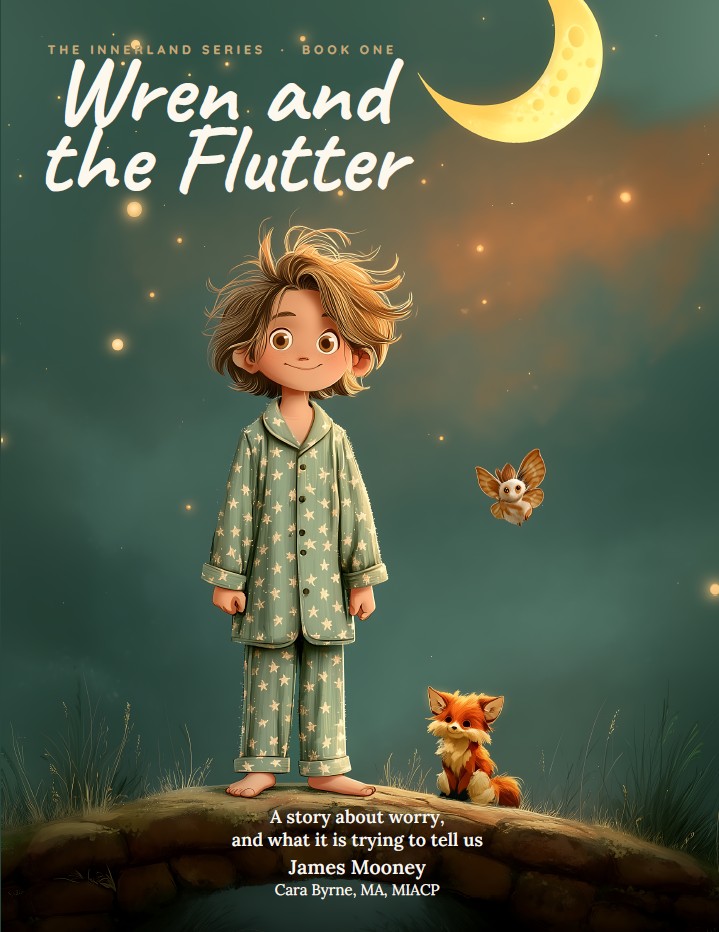
Wren and the Flutter
When the Flutter visits at bedtime, Wren just wants it to go away. But it isn’t here to ruin anything — it’s only trying to help. With a little fox named Pip and three slow breaths, Wren learns something brave.
Most children’s books about big feelings promise the feeling will disappear. It doesn’t, and children notice. So we wrote the honest version — story-led introductions to the feelings every child meets, grounded in the principles of CBT and ACT.
Written by James Mooney, with Cara Byrne, Psychotherapist (MA, MIACP).
For schools and organisations Sets, sessions, workshops Details at the foot of this page →
It only shows up when something mattered.
That line is in every book, and it is the whole argument. The creature is never a villain. It turns up because the child cared about something.
When the Flutter visits at bedtime, Wren just wants it to go away. But it isn’t here to ruin anything — it’s only trying to help. With a little fox named Pip and three slow breaths, Wren learns something brave.
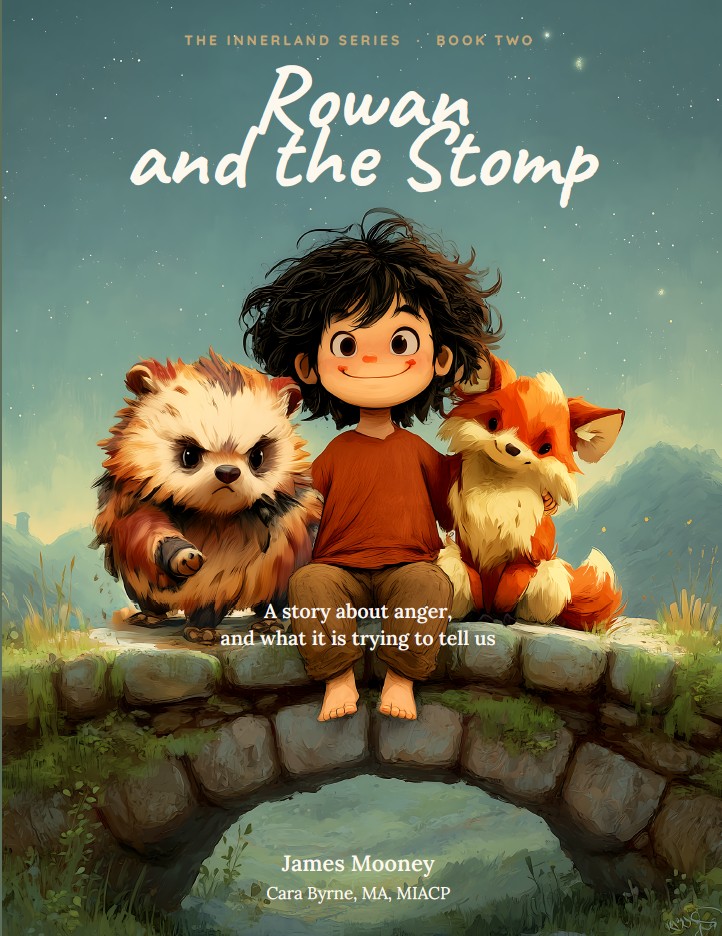
Three whole days of building. Three tall towers, a drawbridge that really moved, and a tiny paper dragon at the very top. Then Theo came round the corner, running fast — and one foot changed everything.
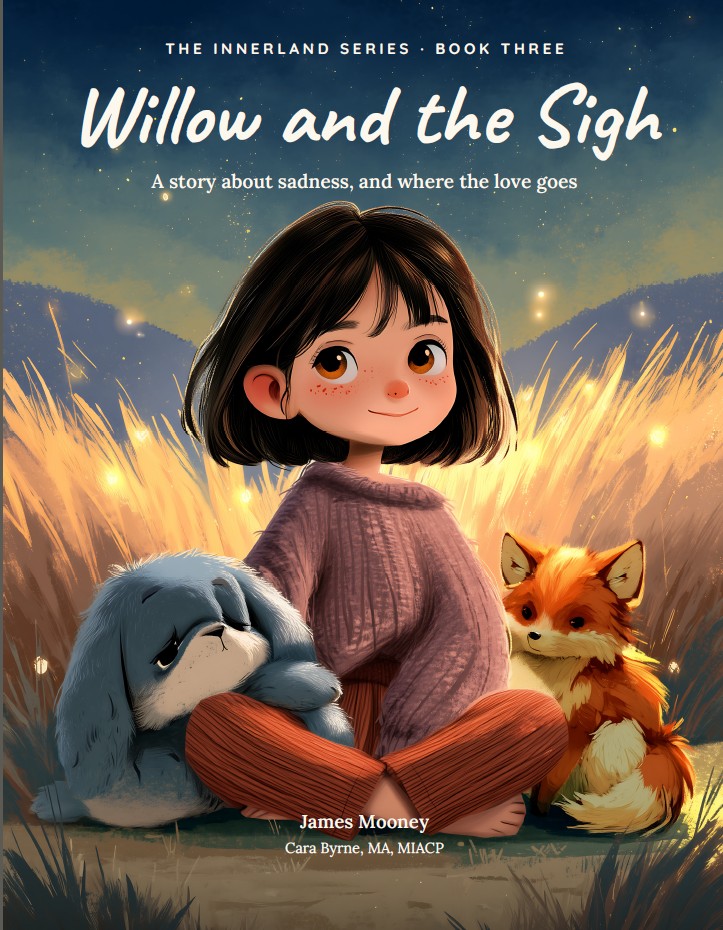
Every Sunday was a Grandad day. But Grandad died in the spring, and now a heavy feeling follows Willow everywhere, like a stone that has found a place to live. The Sigh only shows up when something mattered — and it just needs company.
Ash’s painting goes on the classroom wall behind the coat hooks. Juno’s goes in the middle, with a gold star. The Prickle is hedgehog-like, with soft bendy quills that fluff up whenever it spots something shiny belonging to someone else.
Eight books in all for this age range. Four more feelings are mapped — embarrassment, fear, disappointment and loneliness — and nothing about them is decided yet. After that the series moves up through the older age ranges, with the same bridge and the same fox.
Cara is a psychotherapist and a member of the Irish Association for Counselling and Psychotherapy, and the founder of The Hike Psych.
She reviews the clinical content of every manuscript and leads the material written for the adults — the “Note for Grown-Ups” at the back of each book, and the Parent Companion Guides. I write the stories. She keeps me honest about the psychology; I keep it a story rather than a lesson.
From CBT: the link between a thought, a feeling and what we do next — shown in a story rather than explained. Separating what happened from the story we tell about it.
From ACT: noticing and naming a feeling, making room for it instead of pushing it down, and taking one small step towards what matters.
Every book carries a Note for Grown-Ups, and a free Parent Companion Guide will be available at hikepsych.ie.
Most of the children who need these books meet them somewhere other than a bookshop — a classroom, a waiting room, a family support service. If that is where you work, the books come in sets, and Cara comes with them.
For classroom libraries, school libraries, waiting rooms and family support services. Priced per set rather than per copy.
Led by Cara Byrne, Psychotherapist (MA, MIACP), and built around the books. For ages five to nine.
Longer and more hands-on, for a class or a staff room. We run these together or separately, depending on what you need.
Ages five to nine. The stories are short enough to read in one sitting and are written to be read aloud by an adult, though confident readers manage them alone.
Yes. Grief is one of the feelings the series takes seriously, alongside anger, worry and sadness. Nothing is dressed up and nothing is frightening — the feeling is named, sat with, and made smaller by being understood.
They were written with classrooms in mind. Each book handles one feeling, so a teacher can reach for the one the room needs. Books come in sets for classroom and school libraries, with Parent Companion Guides included.
It means the story teaches a real skill without saying so. Cara Byrne, a psychotherapist and member of the Irish Association for Counselling and Psychotherapy, reviews the clinical content of every manuscript and writes the guidance for the adults.
Yes. Cara runs sessions for small groups, single classes or a full assembly, built around the books and pitched at ages five to nine. She is Garda vetted. The sessions are not therapy and are not a substitute for it.
Sets are priced per set rather than per copy, and sessions are quoted on request — tell us the age group, the number of children and roughly when. We invoice, with a purchase order if your school needs one.
The first books arrive on Amazon in paperback in November 2026. Eight titles are planned for ages five to nine, with further age ranges to follow.
The first books arrive on Amazon in November, in paperback. Join the monthly list and you’ll know the day they land.
Created with AI assistance, directed by me. Every character and every spread is art-directed and chosen by hand, and it is disclosed inside each book.
Picture books, not therapy — and no substitute for it. Willow and the Sigh is written for the death of a grandparent, with the cause unspecified. Families bereaved by suicide should seek specialist support; the book signposts where.